|
Estimated Economic Effects of Proposed Import Relief Remedies for Steel
Executive Summary
I. Introduction
II. How Did We Get Here?
III. Estimated Impacts of the Proposed Remedies
Appendixes
Technical Appendix Technical Appendix An Overview of the Computational Model
A. Introduction
B. General structure
C. Taxes and policy variables
D. Trade and transport costs
E. The production structure
F. The composite household and final demand structure
G. Labor markets
A. Introduction
This appendix provides an overview of the basic structure of the computable general equilibrium (CGE) model employed for assessment of U.S. import restraints on steel. While this appendix provides a broad overview of the model, it does not provide a detailed discussion of mathematical structure. Rather, the reader is referred to Hertel (1996: http://www.agecon.purdue.edu/gtap/model/Chap2.pdf) [18] for a detailed discussion of the basic algebraic model structure represented by the core of the models code. The model is implemented in GEMPACK -- a software package designed for solving large applied general equilibrium models. The model is solved as an explicit non-linear system of equations, through techniques described by Harrison and Pearson (1994). [19] More information can be obtained at the following URL -- http://www.monash.edu.au/policy/gempack.htm. Social accounting data are based on the Global Trade Analysis Project (GTAP) dataset, with updates necessary to benchmark the economic model to the year 2000. (The default GTAP benchmark year is 1997). Updated economic data are taken from public sources provided by the U.S. Department of Labor, the International Monetary Fund, the AISI, and the U.S. Department of Commerce.
B. General structure
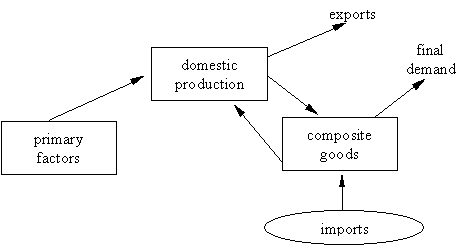
The general conceptual structure of a regional economy in the model is represented in Figure A.1. Within each region (both the U.S. and the rest of world are modeled explicitly as regional economies) firms produce output, employing land, labor, natural resources, and capital, and combining these with intermediate inputs. Firm output is purchased by consumers, government, the investment sector, and by other firms. Firm output can also be sold for export. Land and natural resources are only employed in some sectors, while capital and labor (both skilled and unskilled) are mobile between all production sectors. Capital is fully mobile within regions. However, capital movements between regions are not modeled, but rather are held fixed in all simulations. Labor mobility and wage setting are discussed below.
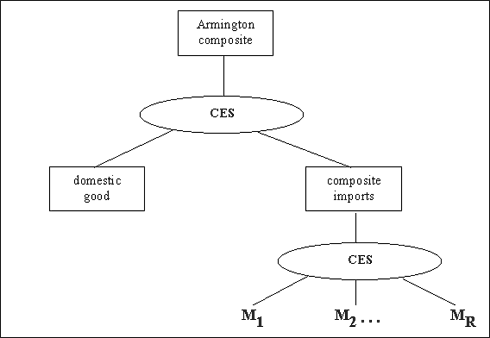
All demand sources combine imports with domestic goods to produce a composite good, as indicated in Appendix Figure A.1. These are called Armington composites. Armington composites represent a combination of imported and domestic goods, which serve as imperfect substitutes for each other. The relevant set of trade substitution elasticities are presented in Appendix Table A.1.
The model includes 2 regions (the United States and the rest of world) and 15 sectors. The list of sectors is shown in Appendix Table A.1. A more detailed definition of these sectors is provided in Appendix Table A.2.
C. Taxes and policy variables
Taxes are included in the theory of the model at several levels. Production taxes are placed on intermediate or primary inputs, or on output. Some trade taxes are modeled at the border. Additional internal taxes are placed on domestic or imported intermediate inputs, and may be applied at differential rates that discriminate against imports. Their actual application in the model reflects underlying social accounting data. Where relevant, taxes are also placed on exports, and on primary factor income. Finally, where relevant (as indicated by social accounting data) taxes are placed on final consumption, and can be applied differentially to consumption of domestic and imported goods.
Trade policy instruments are represented as import or export taxes/subsidies. This includes applied most-favored nation (MFN) tariffs, antidumping duties, countervailing duties, and other trade restrictions. We model steel import quotas explicitly, with quota rents collected by the exporting country. (This is identical to having an endogenous export tax, whose value is a function of the trade level determined by the export quota).
D. Trade and transportation costs
International trade is modeled as a process that explicitly involves trading costs, which include both trade and transportation services. These trading costs reflect the transaction costs involved in international trade, as well as the physical activity of transportation itself. Those trading costs related to international movement of goods and related logistic services are met by composite services purchased from a global trade/transportation services sector, where the composite "international trade services" activity is produced as a Cobb-Douglas composite of regional exports of trade and transport service exports. Trade-cost margins are based on reconciled f.o.b. and c.i.f. trade data, as reported in the underlying GTAP dataset.
E. Production structure
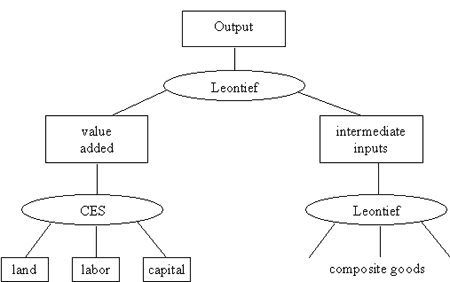
The basic structure of production is depicted in Appendix Figure A.2. Basically, intermediate inputs are combined into a composite intermediate, and this composite intermediate is in turn combined with value added to yield a final product. For example, in the auto sector, steel is combined with plastics, machinery, and other physical inputs, and through value added activities (involving workers, equipment, and energy) yields automobiles as final output. At all stages this is represented by CES production functions. The value-added substitution elasticities are presented in Appendix Table A.1.
F. The composite household and final demand structure
Final demand is determined by an upper-tier Cobb-Douglas preference function, which allocates income in fixed shares to current consumption, investment, and government services. This yields a fixed savings rate. Government services are produced by a Leontief technology, with household/government transfers being endogenous. The lower-tier nest for current consumption is specified as taking a constant difference elasticity (CDE) functional form. The regional capital markets adjust so that changes in savings match changes in regional investment expenditures. (Note that the Cobb-Douglas demand function is a special case of the CDE demand function employed in the model code. It is implemented through GEMPACK parameter files.)
The basic structure of demand is based on Armington preferences, as illustrated in Appendix Figure 2. Under this approach, goods are differentiated by country of origin, and the similarity of goods from different regions is measured by the elasticity of substitution. Formally, within a particular region, we assume that demand goods from different regions are aggregated into a composite import according to the following CES function:
(1) 
In equation (1), Mj,i,r is the quantity of Mj from region i consumed in region r. The elasticity of substitution between varieties from different regions is then equal to sMj , where sMj=1/(1‑rj). Composite imports are combined with the domestic good qD in a second CES nest, yielding the Armington composite q.
(2) 
The elasticity of substitution between the domestic good and composite imports is then equal to sDj, where sDj=1/(1-bj). At the same time, from the first order conditions, the demand for import Mj,i,r can then be shown to equal
(3) 
where EM j,r represents expenditures on imports in region r on the sector j Armington composite.
In practice, because we have a two region model (the U.S. and rest-of-world), the two Armington CES nests are collapsed to a single nest. This implies that the substitution elasticities in equations (1) and (2) are equal. These elasticities are reported in Appendix Table 1.
G. Labor markets
Starting from our benchmark equilibirum, we model a recessionary, or soft labor market, with an allowance for unemployment. To allow for limited labor market flexibility and unemployment, we employ a labor market specification where wages are held fixed and employment levels adjust. The result is that, as firms experience rising costs, they release workers to compensate.
Appendix Figure A.1 Basic Features of the Simulation Model
Specification of production in a representative sector
Production and trade flows
Appendix Figure A.2 Armington Aggregation Nest
Appendix Table A.1 Model parameters
| |
A
|
B
|
| |
trade substitution elasticities
|
elasticity of substitution in production
|
|
|
|
|
|
1 Food
|
2.00
|
0.62
|
|
2 Other primary products
|
3.00
|
0.21
|
|
3 Mining
|
3.00
|
0.2
|
|
4 Steel
|
3.00
|
1.26
|
|
5 Non-ferrous metals
|
3.00
|
1.26
|
|
6 Fabricated metal products
|
3.00
|
1.26
|
|
7 Chemicals, rubber, and plastics
|
2.00
|
1.26
|
|
8 Refineries
|
2.00
|
1.26
|
|
9 Automobiles and parts
|
5.00
|
1.26
|
|
10 Transport equipment
|
5.00
|
1.26
|
|
11 Electrical machinery
|
3.00
|
1.26
|
|
12 Non-electrical machinery and equipment
|
3.00
|
1.26
|
|
13 Construction
|
2.00
|
1.4
|
|
14 Other manufactures
|
3.00
|
1.26
|
|
15 Services
|
2.00
|
1.39
|
| |
|
|
|
source: GTAP database.
|
|
|
note: The same trade elasticity of substitution for steel is reported by K.A. Reinert and D.W. Roland-Holst (1992), "Disaggregated Armington Elasticities for the Mining and Manufacturing Sector," Journal of Policy Modeling, 4:5.
Food
(p) 1110 Agricultural & livestock production (paddy rice only)
(p) 1120 Agricultural services (servicing paddy rice production only)
(p) 1110 Agricultural & livestock production (wheat only)
(p) 1120 Agricultural services (servicing wheat production only)
(p) 1110 Agricultural & livestock production (grains except wheat & rice only)
(p) 1120 Agricultural services (servicing production of grains, except wheat & rice only)
(p) 1110 Agricultural & livestock production (non‑grain crops only)
(p) 1120 Agricultural services (servicing non‑grain crops production only)
(p) 1110 Agricultural & livestock production (wool only)
(p) 1120 Agricultural services (servicing wool production only)
(p) 1110 Agricultural & livestock production (other livestock production only)
(p) 1120 Agricultural services (servicing other livestock production only)
(p) 3116 Grain mill products (processed rice only)
3111 Slaughtering, preparing and preserving meat
3112 Manufacture of dairy products
3113 Canning and preserving of fruits and vegetables
3114 Canning, preserving & processing of fish, crustaceans and similar foods
3115 Manufacture of vegetable and animal oils & fats
(p) 3116 Grain mill products (except processed rice)
3117 Manufacture of bakery products
3118 Sugar factories and refineries
3119 Manufacture of cocoa, chocolate & sugar confectionery
3121 Manufacture of food products n.e.c.
3122 Manufacture of prepared animal feeds
3131 Distilling, rectifying & blending spirits
3132 Wine industries
3133 Malt liquors and malt
3134 Soft drinks & carbonated waters industries
3140 Tobacco manufactures
Other Primary Production
1130 Hunting, trapping & game propagation
1210 Forestry
1220 Logging
1301 Ocean and coastal fishing
1302 Fishing n.e.c.
Mining
2100 Coal mining
(p) 3540 Manufacture of miscellaneous products of petroleum and coal (briquettes only) **
(p) 2200 Crude petroleum & natural gas production (oil only)
(p) 2200 Crude petroleum & natural gas production (gas only)
(p) 3530 Petroleum refineries (LPG only) **
2301 Iron ore mining
2302 Non‑ferrous ore mining
2901 Stone quarrying, clay and pits
2902 Chemical and fertiliser mineral mining
2903 Salt mining
2909 Mining and quarrying n.e.c.
Steel
3710 Iron and steel basic industries
Other Non-ferrous Metals
3720 Non‑ferrous metal basic industries
Fabricated Metal Products
3811 Manufacture of cutlery, hand tools and general hardware
3812 Manufacture of furniture and fixtures primarily of metal
3813 Manufacture of structural metal products
3819 Manufacture of fabricated metal products except machinery & equipment n.e.c.
Chemicals, rubber, and plastics
3511 Manufacture of basic industrial chemicals except fertilisers
3512 Manufacture of fertilisers and pesticides
3513 Manufacture of synthetic resins, plastic materials and man‑made fibres except glass
3521 Manufacture of paints, varnishes and lacquers
3522 Manufacture of drugs and medicines
3523 Manufacture of soap and cleaning preparations, perfumes and cosmetics
3529 Manufacture of chemical products n.e.c.
3551 Tyre and tube industries
3559 Manufacture of rubber products n.e.c.
3560 Manufacture of plastic products n.e.c.
Refineries
(p) 3530 Petroleum refineries (except LPG) **
(p) 3540 Manufacture of miscellaneous products of petroleum and coal (except briquettes) **
Automobiles and parts
3843 Manufacture of motor vehicles
3844 Manufacture of motorcycles and bicycles
Transportation equipment
3841 Ship building and repairing
3842 Manufacture of railroad equipment
3845 Manufacture of aircraft
3849 Manufacture of transport equipment n.e.c.
3821 Manufacture of engines and turbines
Electrical machinery
3831 Manufacture of electrical industrial machinery and apparatus
3832 Manufacture of radio, television and communication equipment and apparatus
3833 Manufacture of electrical appliances and housewares
3839 Manufacture of electrical apparatus and supplies n.e.c. Non-electrical machinery and equipment
3822 Manufacture of agricultural machinery and equipment
3823 Manufacture of metal and wood working machinery
3824 Manufacture of special industrial machinery and equipment except metal and wood working machinery
3825 Manufacture of office, computing and accounting machinery
3829 Machinery and equipment except electrical n.e.c.
3851 Manufacture of professional and scientific,and measuring and controlling equipment, n.e.c.
3852 Manufacture of photographic and optical goods
3853 Manufacture of watches and clocks
Construction
5000 Construction
Other manufactures n.e.c.
3211 Spinning, weaving & finishing textiles
3212 Manufacture of made‑up textile goods excluding wearing apparel
3213 Knitting mills
3214 Manufacture of carpets & rugs
3215 Cordage, rope & twine industries
3219 Manufacture of textiles n.e.c.
3220 Manufacture of wearing apparel, except footwear
3311 Sawmills, planing & other wood mills
3312 Manufacture of wooden & cane containers & small caneware
3319 Manufacture of wood & cork products n.e.c.
3320 Manufacture of furniture & fixtures, except primarily of metal
3411 Manufacture of pulp, paper & paperboard
3412 Manufacture of containers & boxes of paper and paperboard
3419 Manufacture of pulp, paper & paperboard articles n.e.c.
3420 Printing, publishing & allied industries
3231 Tanneries & leather finishing
3232 Fur dressing & dyeing industries
3233 Manufacture of products of leather & leather substitutes,except footwear and wearing apparel
3240 Manufacture of footwear, except vulcanised or moulded rubber or plastic footwear
3610 Manufacture of pottery, china and earthenware
3620 Manufacture of glass and glass products
3691 Manufacture of structural clay compounds
3692 Manufacture of cement, lime and plaster
3699 Manufacture of non‑metallic mineral products n.e.c.
3901 Manufacture of jewellery and related articles
3902 Manufacture of musical instruments
3903 Manufacture of sporting and athletic goods
3909 Manufacturing industries n.e.c.
Services
4101 Electric light and power
4102 Gas manufacture and distribution
4103 Steam and hot water supply
4200 Water works and supply
6100 Wholesale trade
6200 Retail trade
6310 Restaurants, cafes, and other eating and drinking places
6320 Hotels, rooming houses, camps and other lodging places
7111 Railway transport
7112 Urban, suburban and inter‑urban highway passenger transport
7113 Other passenger land transport
7114 Freight transport by road
7115 Pipeline transport
7116 Supporting services to land transport
7121 Ocean and coastal transport
7122 Inland water transport
7123 Supporting services to water transport
7131 Air transport carriers
7132 Supporting services to air transport
7191 Services incidental to transport
7192 Storage and warehousing
7200 Communication
0 Activities not adequately defined
8101 Monetary institutions
8102 Other financial institutions
8103 Financial services
8200 Insurance
8310 Real estate
8321 Legal services
8322 Accounting, auditing and bookkeeping services
8323 Data processing and tabulating services
8324 Engineering, architectural and technical services
8325 Advertising services
8329 Business services, except machinery and equipment rental and leasing, n.e.c.
8330 Machinery and equipment rental and leasing
9411 Motion picture production
9412 Motion picture distribution and projection
9413 Radio and television broadcasting
9414 Theatrical producers and entertainment services
9415 Authors, music composers and other independent artists n.e.c.
9420 Libraries, museums, botanical and zoological gardens,and other cultural services, n.e.c.
9490 Amusement and recreational services n.e.c.
9511 Repair of footwear and other leather goods
9512 Electrical repair shops
9513 Repair of motor vehicles and motorcycles
9514 Watch, clock and jewellery repair
9519 Other repair shops n.e.c.
9520 Laundries, laundry services, and cleaning and dyeing plants
9530 Domestic services
9591 Barber and beauty shops
9592 Photographic studios, including commercial photography
9599 Personal services n.e.c.
9100 Public administration and defence
9200 Sanitary and similar services
9310 Education services
9320 Research and scientific institutes
9331 Medical, dental and other health services
9332 Veterinary services
9340 Welfare institutions
9350 Business, professional and labour associations
9391 Religious organisations
9399 Social and related community services n.e.c.
9600 International and other extra‑territorial bodies
[18] Hertel, T., ed., (1996), Global Trade Analysis, Cambridge University Press: Cambridge MA.
[19] Harrison, W.J. and K.R. Pearson (1994), An Introduction to GEMPACK, Second edition.
|